


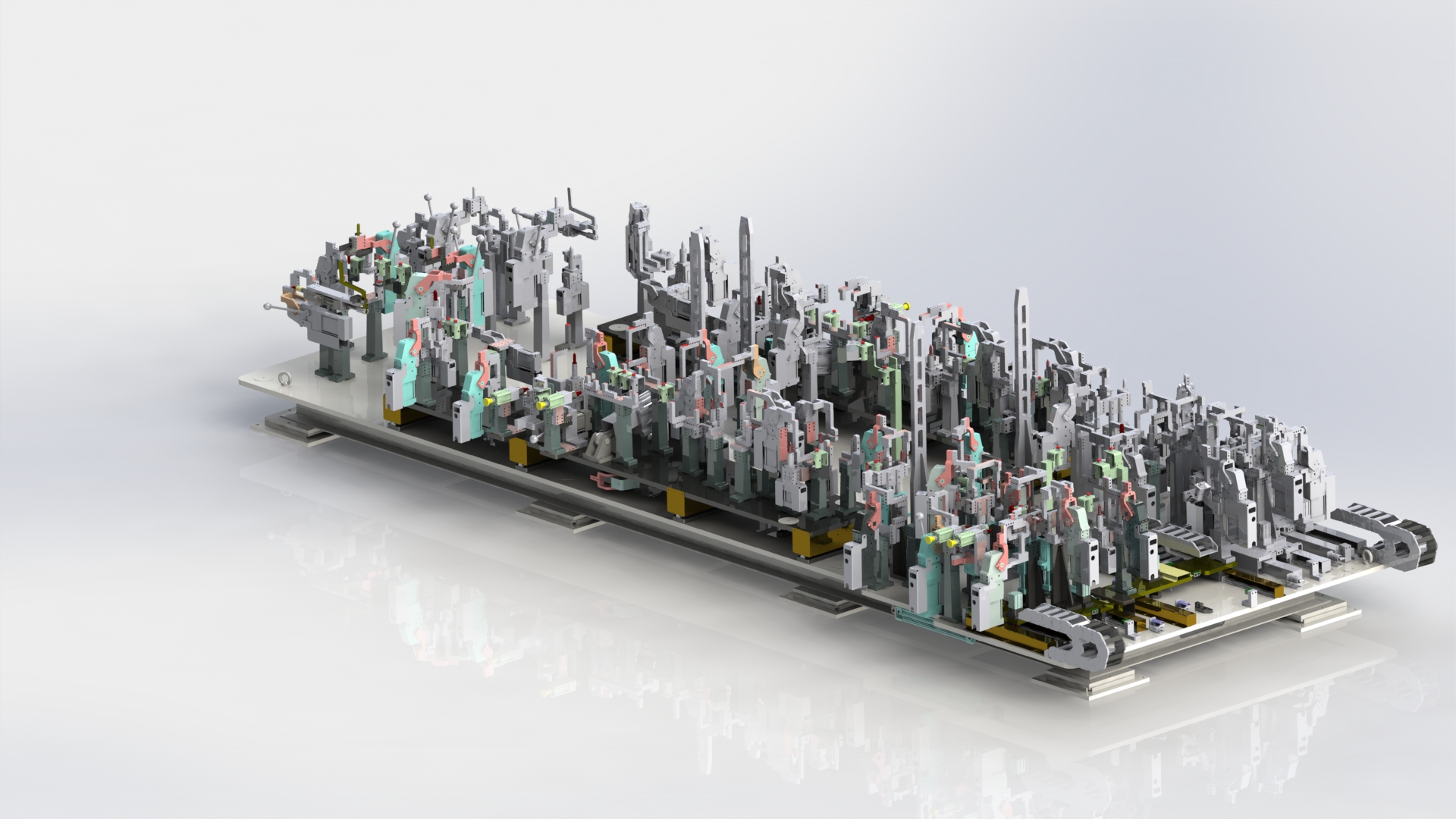
What is a Fixture?
A fixture is a specially designed piece of equipment used in manufacturing processes to hold workpieces in the correct position, preventing movement during operations and ensuring high precision and repeatability. It plays a critical role especially in operations such as welding, assembly, inspection, and machining.
Fixture systems standardize clamping, positioning, and guiding operations across various industries, directly impacting production quality. A properly engineered fixture minimizes operator errors while significantly increasing production speed and efficiency.
Core Functions of Fixtures
- Holding the workpiece in a fixed and accurate position
- Preventing vibrations and movement during operations
- Ensuring repeatability in production
- Optimizing operation times
- Maintaining consistent and sustainable quality
Fixture Components
Fixture systems generally consist of the following components:
- Clamps (Clamp/Clamper): Secure the workpiece in position
- Jig systems: Provide guidance and precise positioning during processing
- Vices and fastening elements: Keep the workpiece stable during operation
- Base plates: The main surface where the workpiece is mounted
These components are combined in different configurations depending on the production process and part geometry.
Manufacturing Methods and Material Selection
Fixtures can be manufactured using different methods such as casting, forging, machining, and welded fabrication. The appropriate method and material selection depend on:
- Geometry of the part
- Production volume
- Load and strength requirements
- Working environment conditions
Steel, aluminum, and high-strength alloys are commonly preferred materials.
Testing and Quality Processes
Fixtures undergo various tests before and after production:
- Strength and durability tests
- Precision and tolerance checks
- Functional validation tests
- Operational efficiency analyses
These processes ensure long service life, safety, and stable performance.
Advantages of Using Fixtures
- Significant reduction in production errors
- Standardized and repeatable production processes
- Reduced dependency on operators
- Increased production speed and efficiency
- Improved workplace safety and process control
Types of Fixtures
Common types of fixtures used in industry include:
- Welding fixtures
- Spot welding fixtures
- Inspection (measurement) fixtures
- Assembly fixtures
- Hydraulic and pneumatic fixtures
- Custom-designed fixtures
Probdizayn Approach
At Probdizayn, we analyze our customers’ production processes in detail and develop tailor-made fixture solutions. From design to manufacturing, we apply engineering principles to deliver high-precision, durable, and long-lasting systems.
Our goal is to make your production processes more efficient, reliable, and sustainable while increasing your competitive advantage.